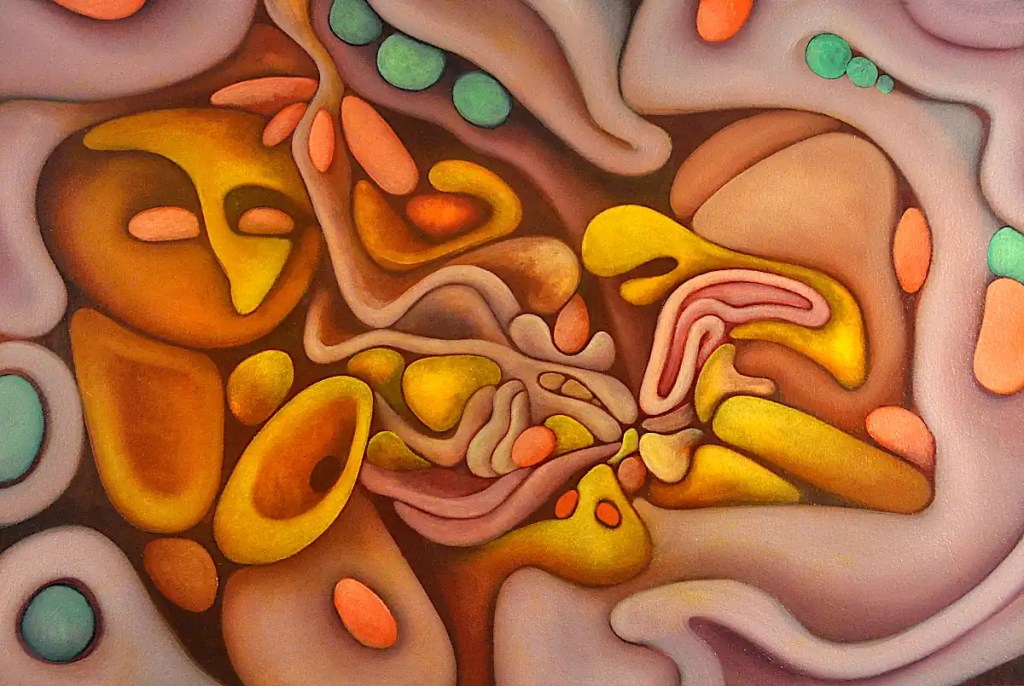
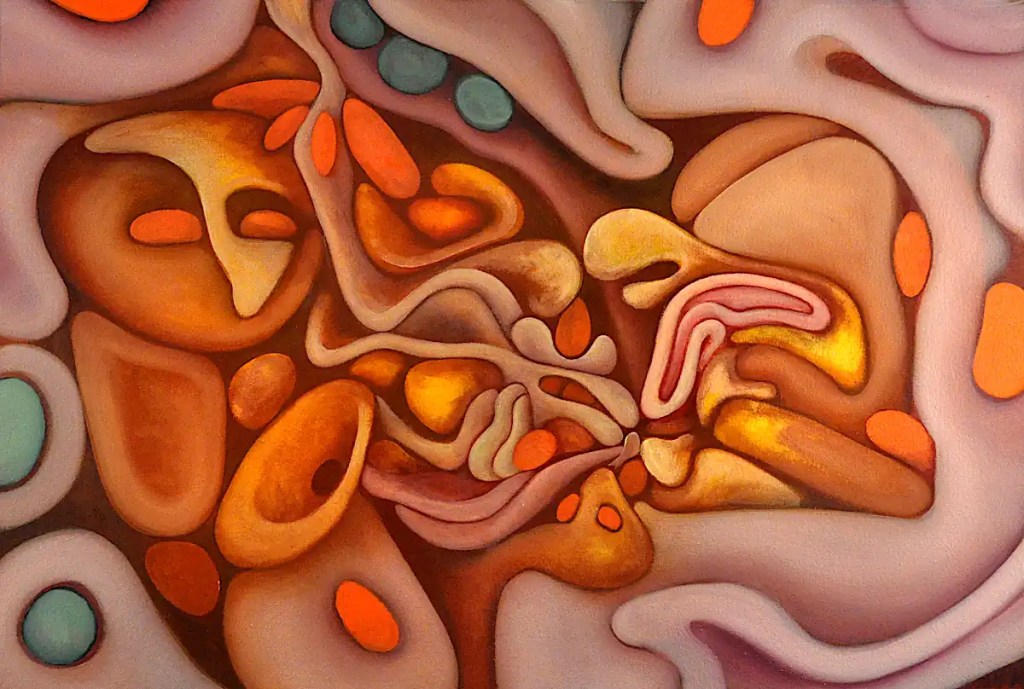
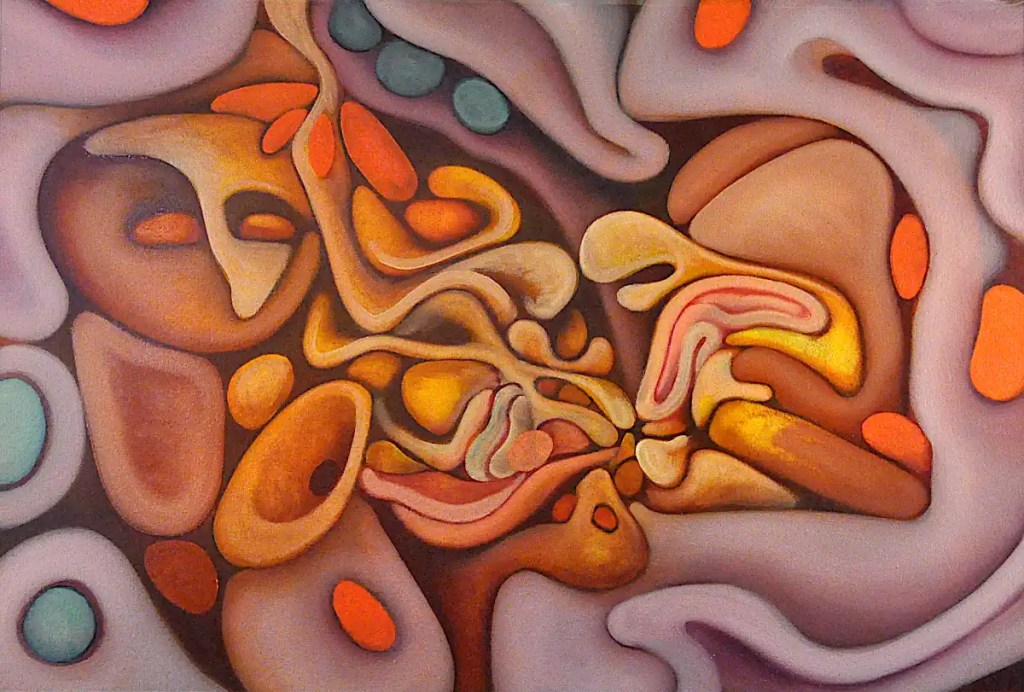
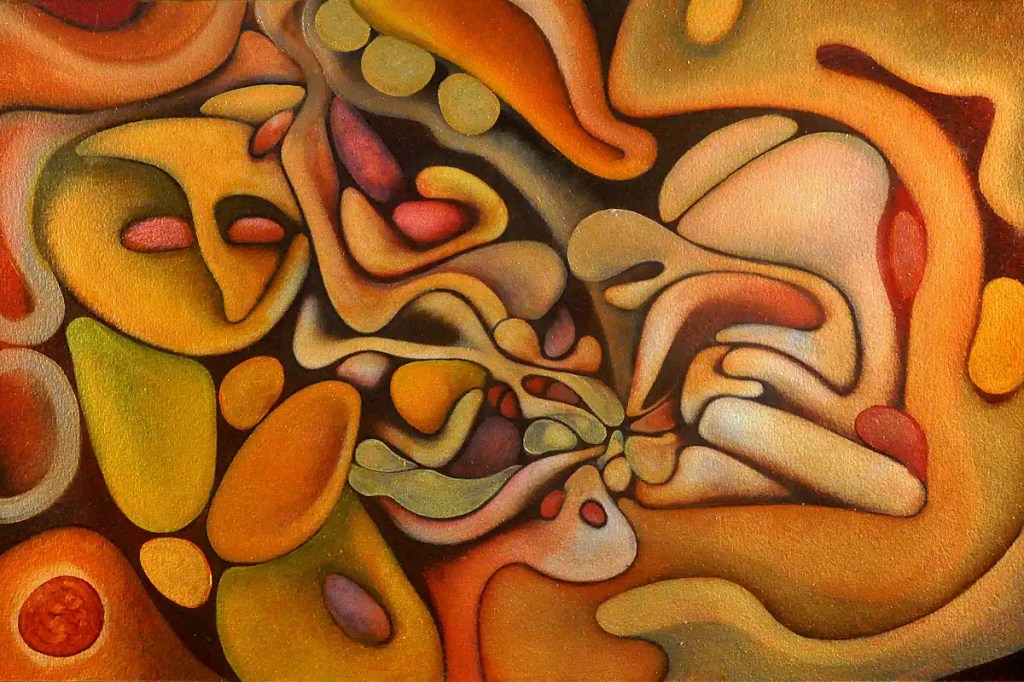
Still clarifying things… In keeping with the “yellow to violet blend” idea, I covered a few things with Sennelier’sIndian yellow orange and worked into that with Sennelier’s Naples yellow and some of Sennelier’s burnt sienna. I added the three green “seeds” in the corner with Senneliers viridian and Naples yellow and clarified a few of the red forms with a mix of Winsor Newton’s scarlet vermilion and Naples yellow.
I figured that for this session, it would probably be a good idea to resolve a few of the essential elements of the thing. I put in many of the shadows and darks with Sennelier’salizarin crimson, worked in the wishbone, rib cage and whatever those other bones are with Sennelier’s Naples yellow, worked out the intestines a little further with alizarin and naples yellow and clarified a few elements with Winsor Newton’s scarlet vermilion.
Despite the weather, I have managed a bit of time to paint. Our internet is finally up and running. I’ve just been writing this as I go so I’m going to put the entire thing up at once.
I started this session with a glaze of Sennilier’sburnt sienna over the outside of the yellow forms and blocked in some of the elements like the “hair” and so on with Winsor Newton’s scarlet vermilion. I glazed over the “intestines” (what’s an evisceration without intestines?) with Sennelier’s alizarin crimson and added some shadows and darker passages with Sennelier’s caput mortuum. Some of the yellow objects got modeled a bit with Sennelier’s Naples yellow. I added a few highlights with it as well. The greenish “seeds” were painted in with Sennelier’s viridian and naples yellow. Some of the mid-tones are painted in with Winsor Newton’s terra rosa.
A couple of things occurred to me yesterday while I was working on this. One was that it would be be cool to grade from purple to yellow… sort of like a flower with a yellow center and violet petals. The other was that James Gurley is definitely one of the greatest guitarists ever to walk the earth… and one of the most underrated.
The above link is my small effort to resolve Mr. Gurley’s ratings problem. As to the issue of developing a gradient on this painting… I started with a thin glaze of Winsor Newton’s Griffin brand Indian yellow. “Griffin” is Winsor Newton’s line of alkyd colors. Alkyds are, for all intents and purposes, fast drying oils.
Next step was to brush Sennelier’sultramarine violet into the outer part of that and to follow it with Winsor Newton’s cobalt violet. I spent some time manipulating the actual gradient then brushed titanium white into it. From a distance you can see the actual violet/yellow vignette/gradient. It’s not so apparent up close.
I went ahead and blocked in some of the forms on the outside with Winsor Newton’s scarlet vermilion to give things a kick and to establish a sort of reference to start building color from… to begin to develop relationships and so on. The colors in this photo are pretty accurate. Things will get “kickier”, more saturated, etc… White tends to “bleach” stuff out but it’s a fast way to define forms.
The medium is Liquin. Liquin is an alkyd based substitute for traditional mediums like linseed oil.
I decided I needed a break from the street yesterday. I spent a few hours cutting panels in the reflective air fryer that is my driveway, and did a bit of work on the painting you see here. This actually has a sort of deadline. It does have a bit of time and it’s pretty far along anyway. I figured it might be a good time to spend some time with it though.
( 🙂 I actually have a version of this photo with even lighting by the way. For some reason, I decided I like this one better. The painting’s got a ways to go anyway. This does show the texture of Arches oil paper pretty nicely.)
This is a version of a painting I did a while back called “Three Aging Musicians”. The title of that one is sort of self explanatory.
This is printed in greyscale on Arches oil paper and reworked in oil. I did have to make a few changes to things to get it to work the way I wanted. I’m sure it will go through quite a few changes before it goes to the gallery.
…
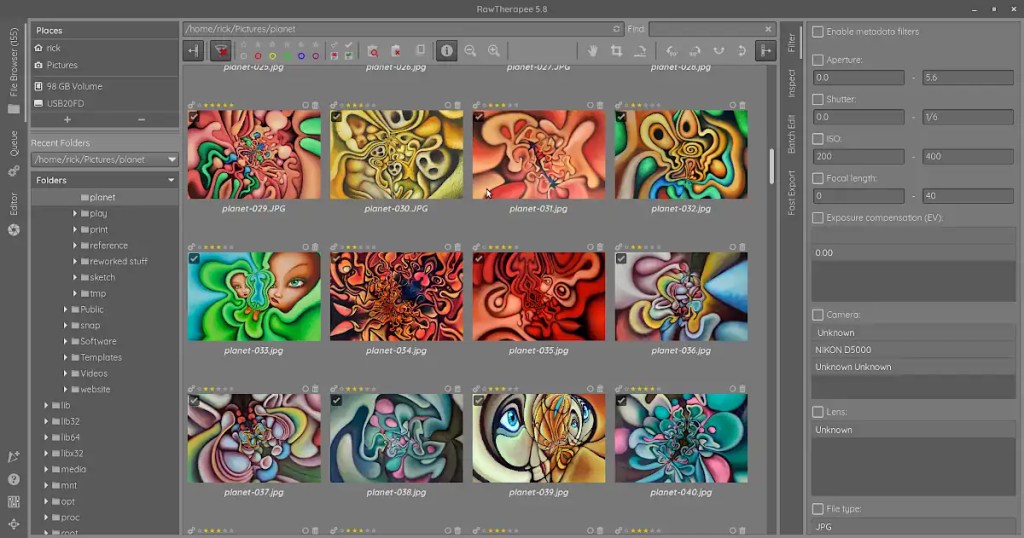
A couple of the things that I really like about gimp (aside from the fact that the developers make every effort imaginable to provide as many options as possible for carrying out a given task: the gradient tool offers a choice of eleven shapes, a choice of color spaces, etc…) are the warp tool, the cartoon filter and the “Little Planet” filter. There are a lot of other things that are great about the program but those are some of my favorite toys. I used them all on a photo of the original to come up with this.
I’m not a big fan of filters that distort things in general but The Little Planet filter, in particular, seems to work with my style of painting. I’m not sure what other uses it might have (aside from making little planets) seeing that it does some pretty severe stuff to an image, but it works nicely for me. I went through a few hundred photos of my paintings recently and came up with a fair number of “re-mixes”:
This is the final version of Monika’s New Red Dress. I figured it was probably time to put up a piece I’ve stopped working on.
One of the most difficult things about this sort of painting is knowing when to stop. That’s probably true of any painting though. I think I got this one to just about the right place. I do tend to overwork stuff. I think that’s part and parcel of the sort of imagery I work with. In the past, I’ve been able to do “simple”. That really just doesn’t work for me these days. I’m sure that will change.
To quote Arshile Gorky: “When something is finished, that means it’s dead, doesn’t it? I believe in everlastingness. I never finish a painting – I just stop working on it for a while.”
I know it took Gorky quite some time to “finish” “The Artist and His Mother“…Da Vinci carted the “Mona Lisa” around with him for a good bit of his life. I have some paintings and sketches I’ve worked at since the mid-eighties… nineties… this century, etc… I suppose that technically a painting’s “finished” when the artist defines it that way. I like the idea that things can be revisited and reworked, Um.. “everlastingly”. Modern technology does a lot to enable that. I have quite a few digitally saved sketches that show quite a bit of promise; even some stuff shot on film. Whenever I’ve made the attempt to push the ideas further… I either failed technically or just didn’t quite understand how to push past a certain point. I have several paintings that I basically stare at once in a while. I just don’t get how to resolve certain issues. That will come.
This is based on a photograph that I took of Monika; a strikingly pretty woman that I met somewhere in the Chicagogoth scene in the late ’90s. She’s the kind of person who turns heads just about everywhere.
I made a stylized sketch from the photo, photographed that and optimized it in gimp… some warping, the cartoon filter and so on. I printed this back out and, just naturally, had to scribble on it. There’s some watercolor and acrylic washes here as well. They give a sort of vague idea of where to take the drawing and introduce a few more random elements to things. The drawing itself is worked in with watercolor pencils and water-soluble graphite.
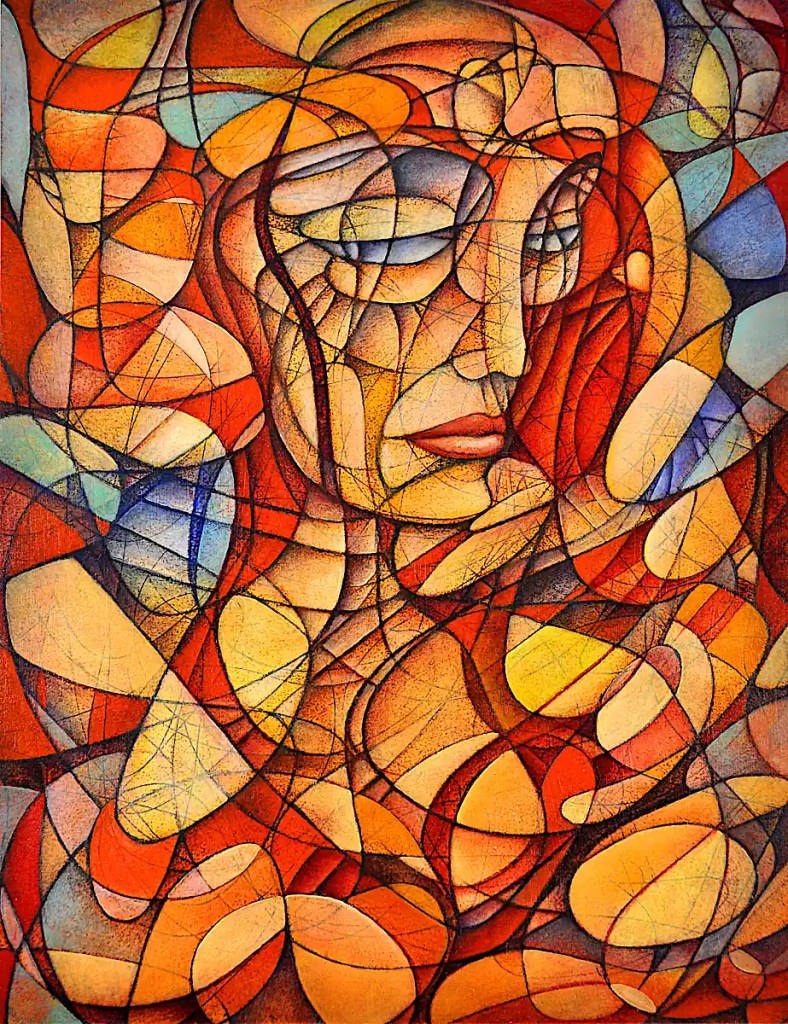
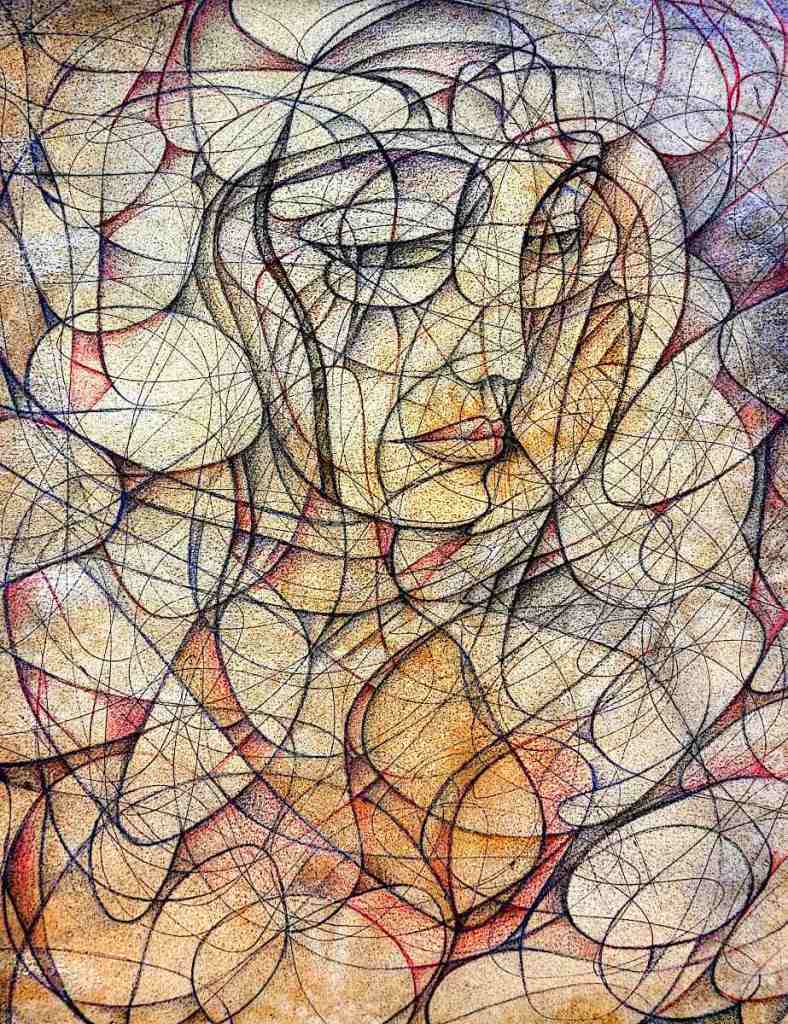
This is today’s intended victim. It’s oil on Arches oil paper. It began life as an automatic drawing. Since its birth, it’s gone through several digital changes, been re-printed in grayscale and “colorized” with oil paint.
Given that I do work with several images every day… it’s a little difficult to know exactly how far I’ll get on a given piece. These are fairly complex and do become a little difficult to work with after a bit. The idea here (one of them anyway.) is to show the process on these things. Posting an “after” without a “before” wouldn’t exactly do that. This is the before. The after will come after.
I have added categories to this page so that the progress of individual pieces is a little easier to follow. Please bear with me. This page is still, very much, a work in progress.
I did digital art exclusively for many years. Quite a few years back (2010 or so), I got fed up with it, tossed the computers and went back to doing art with traditional media. A couple of years ago, I decided that the decision to erase computers from my life entirely might have been overly hasty and started to integrate them back into my artistic workflow.
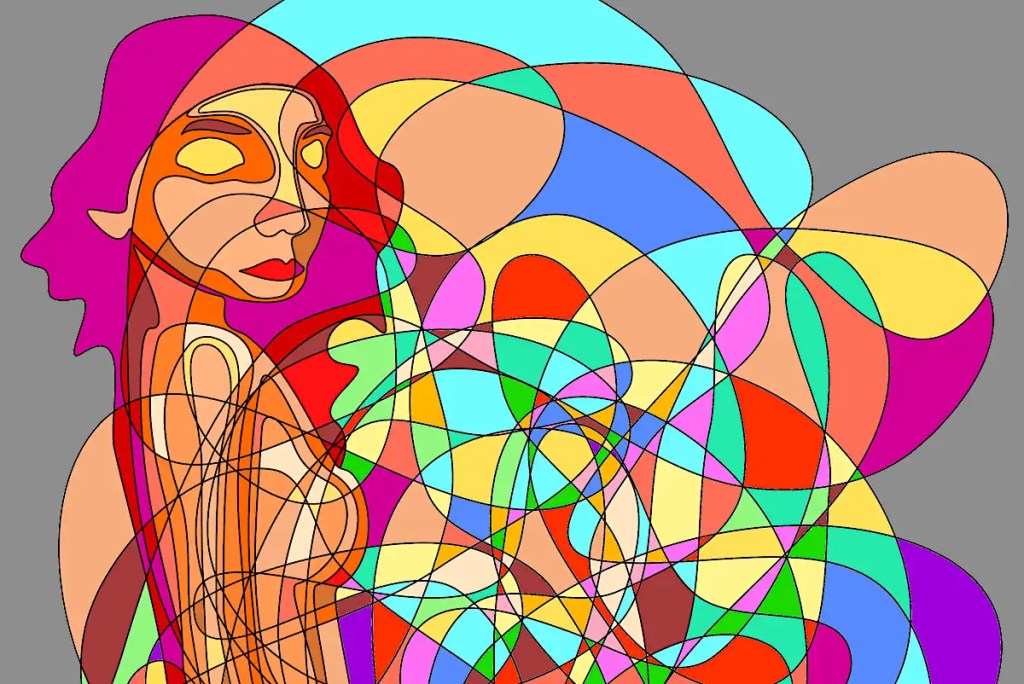
Inkscape is a vector editing program. It’s open source, very capable and “free“.
I sort of wonder if the idea of automatism and that of digital drawing are all that compatible. I suppose that’s an artistic, philosophical quandary that I’ll deal with at some point but, for the time being, the program does offer a way of creating “scribbles” that are infinitely editable and that print cleanly and precisely. It’s an experiment that I’m having some good results with.
Doing things digitally gives me results that are strangely modernist. I get the feeling that some of the work would fit into the mid 1950s very well. It doesn’t provide the same sort of release that working with traditional media does. It’s cerebral with nothing really physical involved. There is no “random” to speak of. I’m sort of tempering that by using the drawings as sketches and adding “random”, paint effects and so on with actual paint.


 Studio Time